Build Your Understanding of Modern Technology
Valdeno Rissimora provides structured, methodical programming education for learners in Canada. Through disciplined curriculum, rigorous concepts, and practical coding exercises, we make software engineering transparent and grounded.

Workspace Rigour
An uncluttered coding environment focused on clean code, software patterns, and conceptual clarity.
Canadian Learner Focus
Tailored instructional pacing for self-motivated university students, career shifters, and technology professionals.
A Structured Approach to Learning
Programming is not a collection of arbitrary tricks; it is an organized discipline of logical reasoning, state management, and clear communication with computing systems.
Clarity Before Complexity
We unpack syntax and data flow into straightforward explanations before introducing intricate enterprise architectures or heavy frameworks.
Grounded Computer Science Concepts
Learners study memory allocation, scope, relational structures, and network protocols so technology choices are understood rather than memorized.
Applied Problem-Solving
Real terminal environments, version control exercises, and realistic codebase tasks turn abstract theory into durable programming capability.
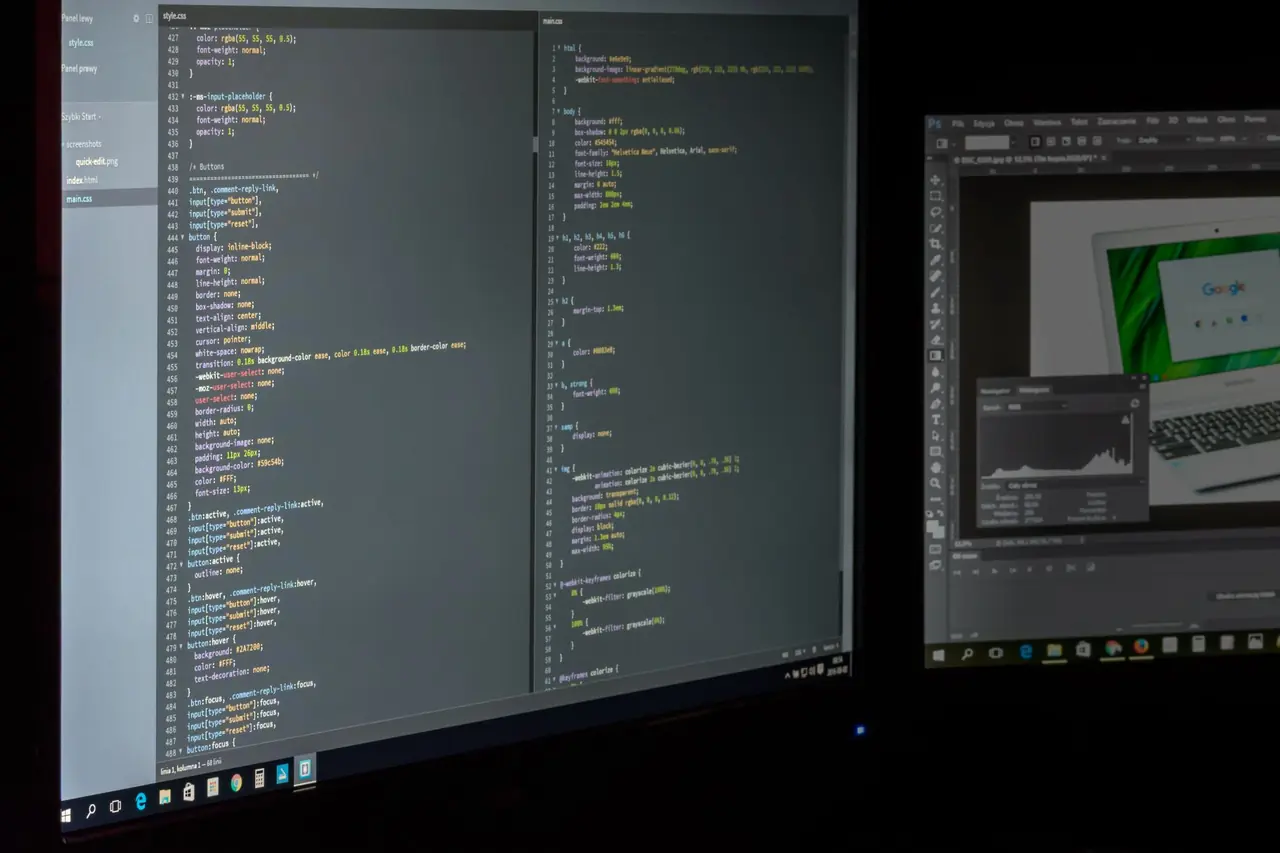
Developing Systematic Thinking
Rather than relying on copy-paste answers, learners build durable mental models. Every concept is connected to how computers execute instructions and how reliable software systems operate in real production environments.
Programming Subjects
A structured educational syllabus composed of eight fundamental programming domains, detailed through analytical tracks, conceptual progression, and applied exercises.
Foundations of Modern Computation
Our primary curriculum builds understanding across algorithmic logic, data organization, and execution flow. Software begins with clean specifications and mathematically predictable structures.
Whether tracing memory usage in low-level sequences or orchestrating asynchronous event loops in web runtimes, learners develop the capability to evaluate trade-offs before writing a single line of production code.
Curated Study Domains
Web & Front-End Development
Semantic HTML5, CSS layout algorithms, accessibility conformance, and component architectures.
Python & Back-End Systems
Server operations, RESTful protocol interaction, script automation, and structured data handling.
Database Fundamentals
Relational database modeling, SQL query design, transactional integrity, and data schema normalization.
Software Engineering Methods
Version control discipline, modular decoupling, test-driven logic, and predictable system design.
From Fundamentals to Practical Understanding
A transparent, stage-by-stage learning pathway that transitions students from elementary programming rules into independent engineering capability.
Foundational Concept Formulation
Study begins with core logic: understanding how binary representation, memory structures, primitive data types, and deterministic execution define programming languages. Students master variables, operators, and control structures without distracting tooling overhead.
Guided Code Implementation & Diagnostics
Students work through verified exercises with deliberate constraints. Learners write functions, structure modular files, and diagnose stack traces under guided instruction. The focus is placed on dissecting why runtime errors happen and how to isolate faults systematically.
Applied Systems & Interconnected Workflows
Isolated code blocks are united into cohesive software assemblies. Learners connect client-facing web pages to back-end endpoints, execute SQL data queries, handle asynchronous delays gracefully, and manage persistence layers with predictable state transitions.
Independent Engineering & Architectural Autonomy
In the concluding stage, learners receive high-level requirements without boilerplate. They design schemas, select data structures, write defensive code, handle edge conditions, and formulate documentation, cultivating self-reliant technical judgment.
Detailed Learning Experience
Explore our curriculum paths, instructional resources, independent study pacing, and common educational inquiries.